
Buying Investment Property in France: What Foreign and Local Investors Often Underestimate
France, -our dear country at the heart of Europe, is not especially difficult to buy in.
What makes it difficult to invest in well is something else: the friction around the asset.
That is where both foreign and local investors often misjudge the market. They spend time on location, price per square meter (Sq M2), and rent assumptions, then treat the rest as paperwork. In reality, the “rest” often determines whether the deal is merely buyable or actually attractive.
That is particularly true in France, where returns are shaped not just by the purchase price, but by acquisition costs, financing discipline, building-level obligations, energy rules, local taxes, and the legal structure of the rental strategy itself. Many buyers do not discover that early enough. They discover it after signing.
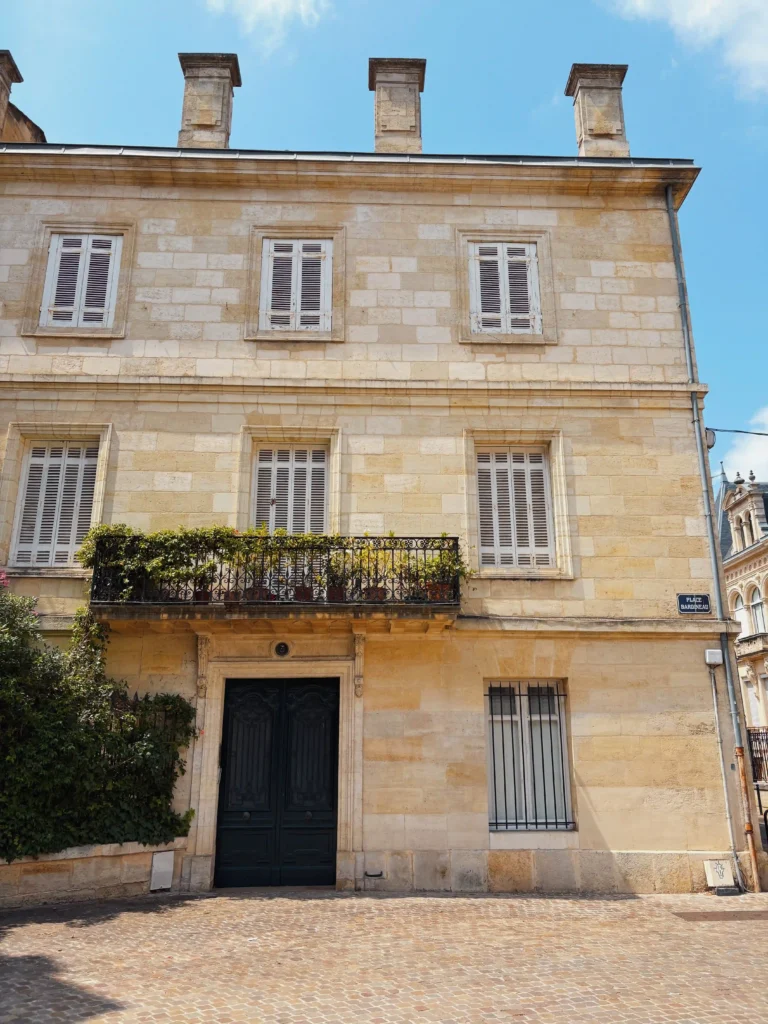
Building at Fondaudège district, Bordeaux
The purchase price is only the beginning
One of the most common mistakes is to think in net seller price and monthly rent, while treating acquisition friction as secondary. It is not secondary.
The French state’s own guidance is clear that acquisition costs include three distinct blocks: transfer taxes, fees and disbursements, and notary remuneration. The tax component alone differs materially depending on whether the asset is old or new: the Taxe de publicité foncière applies at the normal rate for an older property and at a reduced rate for a new property or one bought off-plan, with the global rate shown at 6.32% in the normal case vs. 0.71% in the reduced case, before the additional 0.1% property security contribution and the notary’s regulated remuneration are added.
That does not mean every older property is unattractive, on the contrary.. It means a French investment case can break before the rental phase even starts if the basis is too thin.
Foreign investors often underestimate this because they compare France with markets where the buying costs are lighter or structured differently. Local investors underestimate it when they know the system exists, but still treat acquisition costs as a technicality rather than part of the yield model.
Looking at a property in France and want a sharper investment view?
Flyn & Co. helps investors assess property opportunities through disciplined underwriting, scenario analysis, and execution-aware investment logic.
The transaction process is slower and more binding than many assume
The next surprise is transaction process.
In France, the preliminary sale agreement is not a casual step. Service Public states that the deposit is generally set between 5% and 10% of the purchase price, and that the buyer then has a 10-day cooling-off period after notification of the promise (called in French “Compromise de vente“).
That has two practical consequences.
- First, liquidity matters earlier than some investors expect.
- Second, once that cooling-off period has passed and the financing and conditions precedent are aligned, the deal is no longer a light reservation. It becomes a serious commitment.
This often catches out investors who are used to a looser negotiation culture. In France, the process may feel slow administratively, but it is not casual legally.
Debt capacity is more rules-based than many buyers expect
Another recurring mistake is to assume that financing can be stretched if the asset looks good enough.
French mortgage lending is more constrained than many buyers think. The HCSF framework says the borrower’s effort rate should not exceed 35% of income and the loan maturity should not exceed 25 years, with limited exceptions. The Ministry of the Economy also notes that banks retain discretion and are not obliged to lend simply because a file sits within those limits.
For investors, this matters in two ways.
Foreign buyers often underestimate how much lender appetite can depend on income profile, tax residence, documentation, and perceived complexity. Local buyers often underestimate how little flexibility remains once leverage, other debt, and rental assumptions are stress-tested together.
In other words, a French deal is not financed because the spreadsheet works. It is financed because the borrower and the deal both fit the bank’s framework and requirments.
In an apartment, you are buying a building system, not just a unit
This is one of the biggest blind spots in France.
Many real estate investors analyse the apartment and underanalyse the copropriété.
That is a mistake because in a co-owned building, your investment outcome is partly shaped by the building’s governance, supplier debt, unpaid charges, reserve funds, technical profile, and decision-making quality. Service Public states that the fiche synthétique de la copropriété is mandatory for all co-owned buildings and must include financial and technical information such as current operating charges, exceptional works charges, supplier debt, arrears, and the works reserve fund. A copy must be attached to the sale agreement or deed when a co-owned lot is sold.
That is not minor paperwork. It is part of the underwriting. Local investors often underestimate this because the French apartment market makes copropriété feel routine. Foreign investors often underestimate it because they focus on the flat’s interior and assume common-area governance will take care of itself.
It does not. A mediocre unit in a well-run building can be easier to own than a beautiful unit in a deteriorating one.
Energy and technical constraints are no longer optional diligence
Another major underestimation is energy exposure.
Since 1 January 2025, Service Public says dwellings rated G on the energy performance diagnosis can no longer be rented under leases signed from the start of 2025 because they are treated as non-decent accommodation. The same official source also states that, for the sale of a house or a whole building composed of multiple dwellings rated E, F, or G and owned by a single owner, an energy audit must be provided at the promise or sale stage. It also notes that DPEs produced between 1 January 2018 and 30 June 2021 are no longer valid since 1 January 2025, and that a new electricity conversion factor applies to DPEs produced from 1 January 2026. A novelty.
The point is not only regulatory compliance.
The point is that technical quality now changes economic value more directly than before. Energy performance can affect rentability, renovation needs, resale depth, and the timing of works. Investors who still treat the DPE as a formality are usually underwriting yesterday’s market.
Taxes do not stop at acquisition
A lot of buyers model France as though the main tax question is only at purchase or sale.
That is too narrow. Service Public states that Taxe foncière is due by the owner or usufructuary of a built property on 1 January of the tax year, and that the same notice also includes the household waste charge. Service Public also states that Taxe d’habitation on second homes still applies to a furnished dwelling that is not the owner’s principal residence.
That matters because these items change the real operating yield.
Foreign investors often underestimate them because they focus on rent and headline property tax comparisons across countries. Local investors underestimate them when they know the taxes exist but still exclude them from deal-level return discipline.
A French property can still be a good investment with those costs. But it should not be judged as if those costs are peripheral.
Your rental strategy changes the legal and tax logic
Another common error is to think “rental property” is one category.
It is not. In France, the tax and legal treatment can change materially depending on whether the asset is rented empty, furnished, as a principal residence, under a mobility structure, or under a more specific operating model. At a minimum, Service Public states that income from unfurnished residential rental is taxed as revenus fonciers, with different rules depending on whether annual rents excluding charges are below or above 15 K EUR.
Why does that matter?
Because the operating model shapes:
- Taxation
- Lease mechanics
- Vacancy profile
- Management intensity
- And sometimes exit attractiveness
Foreign investors often underestimate this because they come in through a “France property” lens rather than a “French rental regime” lens. Local investors sometimes make the opposite mistake: they know the categories, but still underwrite them too casually.
In practice, the rental strategy is part of the asset, of the investment. It is not a later decision layered on top of it.
Non-residents often underestimate the administrative tail
The French market does not become simpler after closing.
For non-residents, impots.gouv states that IFI can apply where French net real estate assets exceed 1.3 M EUR, and that owners must declare the occupancy status of their built properties through their tax account. The same administration also states that when a non-resident sells French real estate, a fiscal representative is required unless an exemption applies, including for certain EU or EEA cases, certain sale prices, or qualifying long holding periods.
This is one of the biggest foreign-buyer underestimations: they assume the purchase is the hard part, when in reality the ownership and exit administration can be just as important.
But local investors are not immune either. They often underestimate the administrative drag of repeated ownership, declarations, and tax coordination across assets.
The deeper lesson
What both foreign and local investors often underestimate is the same thing in different forms:
France is not usually a market where simplicity survives contact with reality.
That does not make it unattractive. In many ways, it makes it more investable for disciplined buyers. The market can still work well for investors who underwrite basis, financing, legal structure, taxes, and technical risk properly.
But it does mean a French investment property should not be assessed through the narrow lens of:
- Purchase price
- Monthly rent
- And a rough gross yield
That is not enough.
Final thought on properties in France
The strongest French real estate investments are often not the ones that look easiest at first glance.
They are the ones that still look strong after you account for everything buyers like to minimise:
- Acquisition friction
- Financing constraints
- Building-level risk
- Energy exposure
- Ongoing taxes
- Rental-regime logic
- And exit administration
That is what foreign investors often underestimate.
And it is also what many local investors already know, but still do not model rigorously enough.
In France, the asset matters.
But the structure around the asset matters almost as much.
One final word : Stay tuned for more insights on Finance, Investing, Real Estate & Startups.
More posts...
Preparing a Board for a Difficult Quarter
How to explain a performance miss and secure decisions while the business still has room to act.
SaaS Financial Planning: How to Turn ARR Growth Into Cash and Enterprise Value
SaaS Financial Planning: How to Turn ARR Growth Into Cash and Enterprise Value ARR growth tells you whether a SaaS company is getting bigger. It
Budget 2027: Build a Plan Your Business Can Actually Use
The strongest budgets make assumptions explicit, quantify the cash impact and define how management will respond.
Why Bordeaux Wine Estates Need a 24-Month Cash Model
Why Bordeaux Wine Estates Need a 24-Month Cash Model Bordeaux’s wine industry is adjusting to lower volumes, shifting consumption, weaker exports and structural vineyard contraction.
Fractional CFO vs. Full-time CFO: Which One Should an SME Choose?
Fractional CFO or full-time CFO? Learn which option makes more sense for SMEs, growing businesses, and founder-led companies that need financial leadership without overbuilding the finance function.
Bordeaux Neighborhoods for Property Investment: Which Signals Matter Most?
Learn how to assess Bordeaux neighborhoods for property investment using four key signals:
tenant demand, entry basis, capex risk, and exit depth. A practical framework for smarter real estate
decisions.