
Is Bordeaux Real Estate Still a Good Investment in 2026?
The better question is not whether Bordeaux is “good” or “bad.”
It is whether Bordeaux, this city in South West France, still offers a favorable enough mix of pricing, demand, and execution potential to justify risk-adjusted capital.
In 2026, the answer is still yes, but with more conditions than before.
That matters because Bordeaux is no longer a property market where a broad city-level story does most of the work. The easy narrative has faded. Investors now need sharper underwriting, clearer strategy selection, and more realism around regulation, renovation, and exit assumptions.
That shift is not a weakness. It is what turns a city from a fashionable market into a serious one.
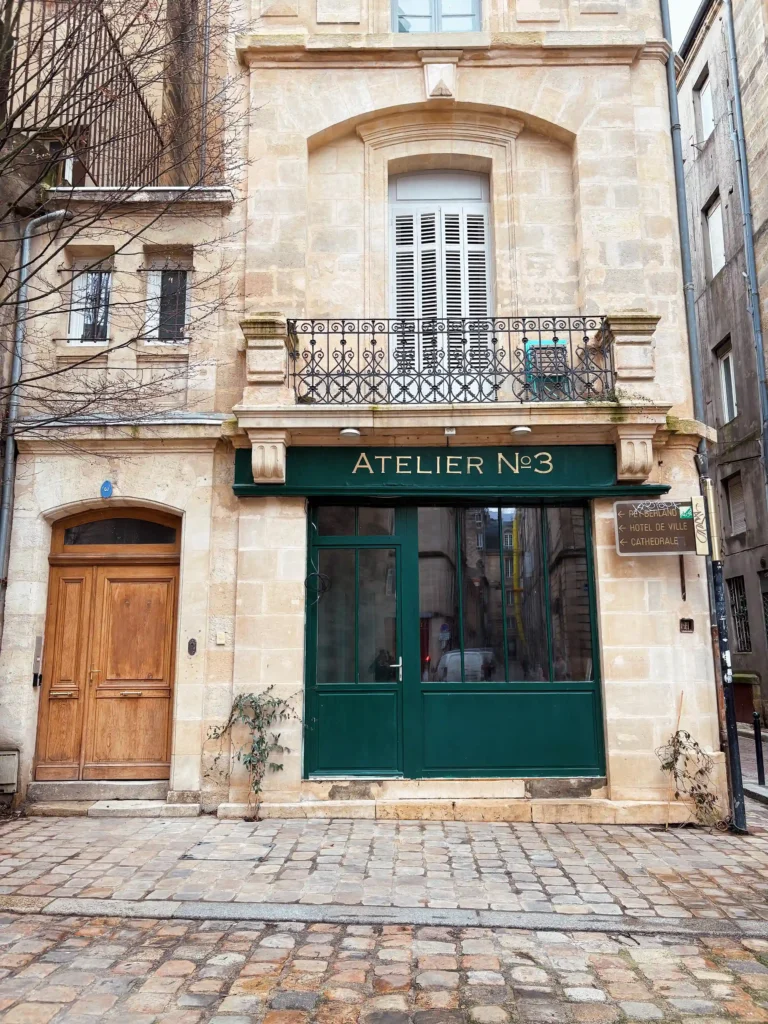
Streets of Saint Pierre district, Bordeaux
Bordeaux has not lost its fundamentals
Bordeaux still benefits from the characteristics that made it attractive for both French and Foreign investors in the first place: a large employment base, a strong urban profile, a dense central fabric, and sustained entrepreneurial activity.
INSEE’s data for the Bordeaux employment zone shows 535 K people in employment in 2022, with an employment rate of 68.2% among those aged 15 to 64. At city level, Bordeaux recorded 11.2 K business creations in 2024, up from 8.5 K in 2023. That does not prove every property strategy works, but it does support the idea that Bordeaux remains an economically active city in Nouvelle-Aquitaine (South-West France), with continued business formation and demand drivers beyond pure tourism.
That is important because real estate markets rarely stay resilient on image alone. They need users, employers, mobility, and a reason for people to keep living and working there.
Bordeaux still has that.
Prices have reset, but the city has not collapsed
The most useful way to look at Bordeaux in 2026 is not as a boom market, and not as a distressed one. It is a market that has corrected, stabilised, and become more selective.
A notarial market note published in February 2026 put the median price for old apartments in Bordeaux at 4 240 EUR/m² in Q3 2025, –1% YoY, while old houses were at 345 K EUR, up 0.4% on the same basis. In other words, Bordeaux does not look like a city in free fall. It looks more like a city that has moved out of excess and back into underwriting logic.
That distinction matters. In overheated markets, investors can get away with weak discipline because rising prices cover mistakes. In a flatter market, execution quality matters again. That usually creates better conditions for serious buyers than for casual ones.
The mistake is to think city-level attractiveness is enough
This is where many investors still get Bordeaux wrong. They ask whether Bordeaux is a good investment as if the whole city were one asset. It is not.
The investment case depends on at least 5 variables:
- The Acquisition basis
- The Micro-location : Street, District, dynamics
- The Intended hold strategy
- The Capex burden
The Operating constraints
That means “Bordeaux in Real Estate is attractive” is not a conclusion. It is only the beginning of the work : a small apartment at Mairie district bought at the wrong basis, in a weak micro-market, with unrealistic long or short-term rental assumptions, can still be a poor investment in a city with strong fundamentals. On the other hand, an asset with a better entry price, clear repositioning potential, and a realistic exit path can still work well.
That is why Bordeaux in 2026 is best understood as a selective opportunity market, not a blanket opportunity market.
Regulation matters more than optimism
One reason Bordeaux should still be treated as an underwriting real estate market, not a mood market, is regulation. On short-term rentals, the direction of travel in France is broadly clear: municipalities now have stronger tools to regulate tourist accommodation, especially when too much housing is being diverted away from the residential market. In Bordeaux, the local framework already reflects that logic: primary residences are capped at 90 rental days per year, while secondary residences require a change-of-use authorisation. That does not make short-term rental unattractive by definition. It implies investors should treat the regulatory environment as part of the business model rather than as a secondary detail.
Long-term rental is not regulation-free either. Since 1 January 2025, homes rated G on the DPE can no longer be newly let, and F- and G-rated dwellings are also constrained in their ability to support rent increases. In practice, that means the long-term market may offer more stability than short-term rental, but it increasingly rewards assets that are already compliant or can be upgraded at a sensible cost.
In France in 2026, regulatory risk is no longer a short-term-rental issue only; it is a central part of underwriting both tourist lets and standard residential leases.
The older housing stock is both a risk and an opportunity
In Bordeaux, older housing stock is not a niche characteristic of the market. Insee data show that in 2021, 23.3% of principal residences were built before 1919 and another 11.7% between 1919 and 1945. In other words, roughly 35.0% of Bordeaux’s principal residences predate 1946.
That matters because older assets are often where investors find the best central locations, architectural character, and repositioning potential, but also where they inherit energy-performance issues, copropriété (jointly owned building) constraints, irregular layouts, façade or roof works, and renovation surprises.
This matters even more because France cannot rely on a fast wave of new-build supply to solve the problem. Official SDES data show that 379 K dwellings were authorised in 2025, up 15.0% vs. 2024 but still 8.8% below the average of the previous five years. The FFB also notes that the market is rebounding only from a very low base: housing starts had collapsed by nearly 40% between 2021 and 2024, and the federation still expects only about 296 K housing starts in 2026, which remains weak by historical standards.
The slowdown has been driven by a mix of higher financing costs, elevated construction costs, regulation, and financial pressure across the development chain. In practical terms, that means much of France’s housing adjustment still has to come from upgrading, renovating, and repositioning older stock rather than waiting for abundant new supply.
In Bordeaux, that makes the old-stock market structurally important, not just visually appealing.
Looking at a Bordeaux deal and want a sharper investment view?
Flyn & Co. helps investors and decision-makers assess real estate opportunities through disciplined underwriting, scenario analysis, and execution-aware investment logic.
What still works in Bordeaux in 2026
The market now rewards clarity more than enthusiasm. The strongest Bordeaux strategies in 2026 are likely to be the ones that answer three questions well:
1. Why this asset?
A good Bordeaux property investment now starts with the asset-level case:
- Better-than-market entry basis
- Layout / renovation upside
- Credible rental demand
- Realistic liquidity on exit (if applicable)
- Plus, no hidden dependence on an over-optimistic operating model
2. Why this strategy?
Investors should be clear whether the plan is:
- Long-term residential hold
- Furnished medium / long-term rental
- Value-add renovation and resale
- Mixed hold-and-exit logic
Each of those requires a different return profile, risk tolerance, and Cash-Flow model.
3. Why now?
The case for buying in 2026 is not that Bordeaux is “cheap.”
The case is that the market has become more rational. That can be favorable for disciplined buyers because:
- Price exuberance has cooled
- Negotiation may be more realistic than during peak periods
- Weak assumptions are less likely to survive scrutiny
- Better operators may face less competition from speculative buyers
That is usually when underwriting skill matters most.
Where investors should be more careful
There are still clear traps. Let’s explore what we have seen.
Execution quality matters more than a simple story
In Bordeaux, many of the most interesting assets are not the easiest ones to buy. They are the properties where value sits behind a layer of complexity: renovation scope, energy upgrades, copropriété rules, layout redesign, furnishing logic, or a change in operating model. The wrong response is not to avoid complexity altogether. It is to underestimate what that complexity will cost in time, capital, and execution risk.
That is why the better question is rarely, “Is this asset easy?” The better question is, “Is this asset underwritten properly?” In a market shaped by older housing stock, tighter energy standards, and selective local regulation, execution quality increasingly separates genuine value creation from expensive disappointment. The investors who do best are usually not the ones who buy the cleanest narrative. They are the ones who understand where the operational friction is, price it correctly, and still see a credible route to returns.
Confusing gross yield with real return
Headline rental yield for a Bordeaux property is not enough. On a dynamic property market, the real question is what remains after:
- Acquisition costs
- Renovation
- Financing
- Vacancies (Occupancy rates)
- Operating costs
- Regulation and
- Exit costs
Headline rental yield is not enough. It is useful as a first filter, but a weak basis for an investment decision. A property can look attractive on a gross yield basis and still underperform once those elements are properly reflected.
This is especially important in a market like Bordeaux, where older stock, location differences, and operating strategy can materially change the economics of the same nominal rent level. Two assets may show similar gross yield on paper, yet produce very different outcomes once Capex, occupancy, rent stability, or management intensity are considered.
That is why serious underwriting should move quickly from gross yield to net operating performance, cash-on-cash logic, as well as realistic exit assumptions (if applicable). Gross yield may tell you whether a deal deserves a closer look. It does not tell you whether the deal actually creates value.
Ignoring regulation and underestimating the case for mid to long-term rentals
This is one of the fastest ways to break a Bordeaux deal. A model that only works under an aggressive short-term rental scenario is usually not a robust model in the city today. Bordeaux’s official rules remain clear: a secondary residence used as tourist accommodation requires a change-of-use authorisation, while a primary residence is capped at 90 days per year from 2026.
That is exactly why investors should look more seriously at Mid – Term to long-term rental strategies. They usually offer less headline upside than short-term rentals, but they can provide something more valuable in a tighter market: greater regulatory clarity, more stable occupancy, lower operating friction, and a model that depends less on tourist volatility. In practice, that means the underwriting can be built around residential demand rather than regulatory exceptions. This is often a better fit for Bordeaux when the asset is in a good residential location and the business plan is based on durability rather than maximum nightly yield.
For investors, the key distinction is simple. A standard furnished rental used as the tenant’s principal residence is typically let for 1 year. An unfurnished residential lease is typically 3 years minimum when the landlord is an individual. A bail mobilité can also be relevant for eligible profiles such as students, trainees, or people on professional assignments, and runs from 1 to 10 months without renewal. Those formats do not eliminate execution risk, but they often produce a more disciplined and financeable investment case than a model that relies too heavily on tourist-rental assumptions.
In other words, Bordeaux should not be underwritten as though every apartment needs a short-term rental strategy to work. In 2026, some of the stronger opportunities may come from assets that perform well under a mid-term furnished plan or a classic long-term residential hold, because those strategies can align better with regulation, operating simplicity, and real local demand.
Underestimating older-stock Capex
Bordeaux’s architectural appeal is part of the investment story, but it is not free. Older assets can offer upside, but they often require better technical diligence and more conservative Capex planning.
So, is Bordeaux still a good investment in 2026?
Yes, but not automatically. Bordeaux still looks investable because the city in South West France retains meaningful economic activity, entrepreneurship, great location, and a real urban demand base. Prices appear to have corrected rather than collapsed, which can create a healthier entry environment for disciplined investors. And the built fabric still offers room for value creation where underwriting and execution are both strong.
But the city is no longer forgiving enough to reward vague strategy.
In practical terms, Bordeaux is a good investment in 2026 for investors who:
- Buy with discipline
- Underwrite regulation honestly (Short-Term)
- Treat Capex as real
- Match the asset to the operating model
- And think in terms of risk-adjusted return, not only narrative
That is a better answer than a generic yes…
Final thought
The Bordeaux question in 2026 is not whether the city is still attractive. It is whether the deal in front of you is strong enough to deserve the city.
That is how the market should be approached now. The investors who still do well in Bordeaux will not be the ones relying on yesterday’s enthusiasm. They will be the ones combining local understanding, realistic assumptions, and finance-grade underwriting.
That is what separates a market story from an investment case.
One final word : Stay tuned for more insights on Finance, Investing, Real Estate & Startups.
More posts...
Buying property in France : What Foreign and local investors often underestimate
Buying Investment Property in France: What Foreign and Local Investors Often Underestimate France, -our dear country at the heart of Europe, is not especially difficult
Why Cash Flow Forecasting Still Breaks in Small Businesses — and How to Fix It
Why Cash Flow Forecasting Still Breaks In Small Businesses — And How To Fix It Most small businesses do not have a cash problem because
Blue sky investing
Blue sky investing Blue Sky Investing is a strategy that focuses on visionary, long-term opportunities with the potential for exponential growth. Unlike traditional investment approaches